Press Release
Athena, the Stage is Yours: The Parthenon Puzzle
18 November 2026–25 July 2027
Liebieghaus Skulpturensammlung
Press Preview: Tuesday, 17 November 2026, 11.00 am
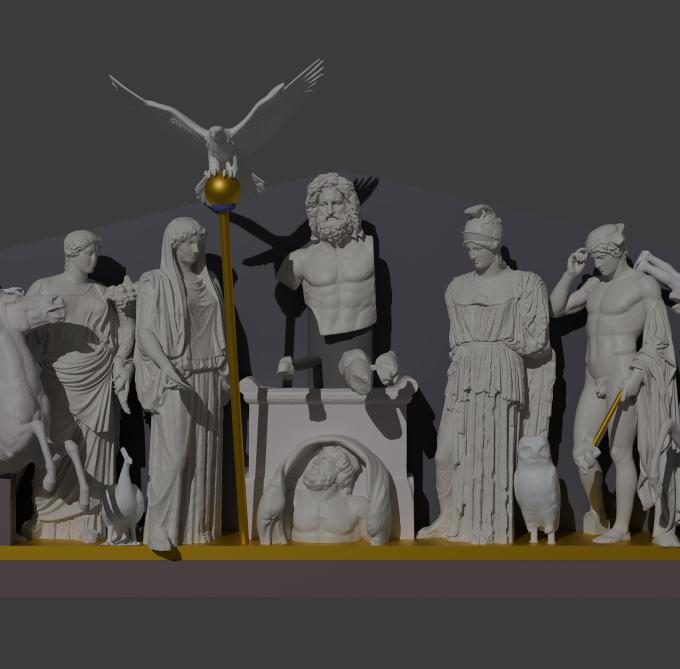
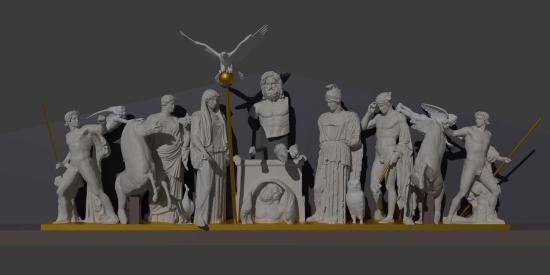
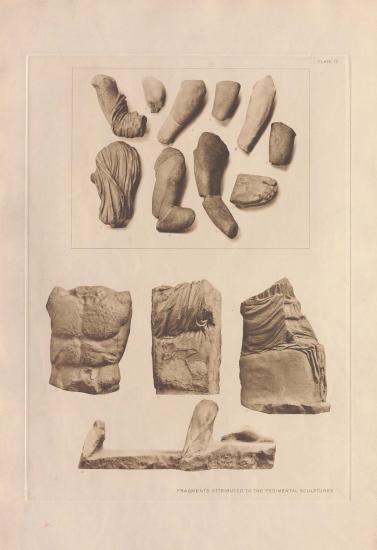
A 2,500-year-old image is taking shape once more: much like a giant three-dimensional puzzle, years of research have finally succeeded in reassembling the fragments of one of the most famous works of antiquity and piecing them together to form a complete picture. From 18 November 2026, the Liebieghaus Skulpturensammlung will present, for the first time, an archaeologically grounded proposal for the complete reconstruction of the Parthenon’s east pediment in the exhibition “Athena, the Stage is Yours: The Parthenon Puzzle”. To this end, the research team led by Vinzenz Brinkmann, Head of the Liebieghaus Department of Antiquities, has re-examined around sixty surviving fragments using 3D scans, assigned them to individual figures and cross-referenced them with ancient written sources as well as Roman reproductions of lost Greek sculptures. This has resulted, for the first time, in a scientifically sound, comprehensive picture, down to the last detail, of the scene that once dominated the entrance to the Parthenon: the birth of the goddess Athena from the head of her father, Zeus.
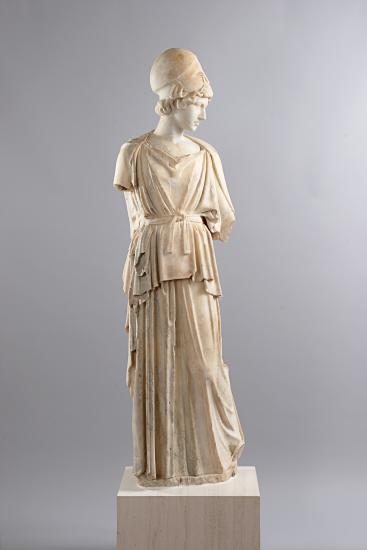
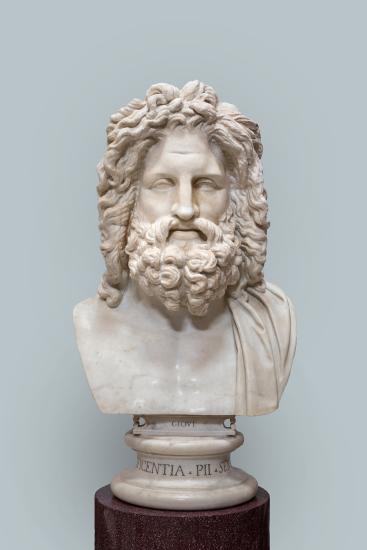
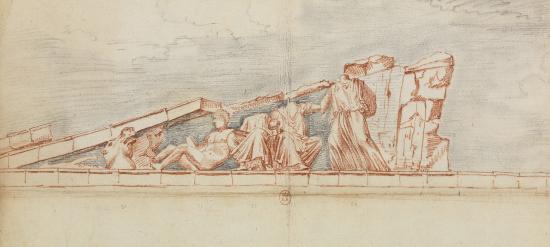
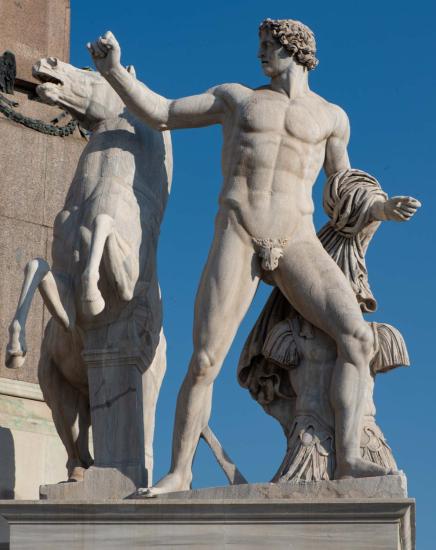
The approximately thirty-metres-wide east pediment originally comprised thirty-nine monumental marble sculptures up to three and a half metres in height. Fires, earthquakes and human intervention destroyed large parts of the ensemble; only eleven smaller sculptures from the corners of the pediment are partially preserved, while around 240 fragments bear witness to the lost colossal figures. Although these were published as early as 1910, crucial questions regarding the arrangement and form of the figures have remained unanswered until now. The Liebieghaus exhibition illustrates how Vinzenz Brinkmann’s team has reconstructed the lost sculptural ensemble from individual fragments, technical traces and historical pictorial sources. Three stages of reconstruction show the surviving remains, the newly established attributions and the resulting proposal for the composition of the east pediment. Particularly revealing are sculptures of which little or nothing survives today. Roman sculptures that repeat motifs from the lost Greek ensemble provide clues as to their form and position. For example, the Dioscuri in Rome’s Piazza del Quirinale and a figure of Hermes can be directly linked to the Parthenon on the basis of characteristic details.
The exhibition brings this research process to life through selected works from the Liebieghaus Skulpturensammlung, as well as high-calibre loans from, among others, the Louvre in Paris and the Vatican Museums. A specially developed exhibition design guides visitors step by step through the reconstruction, linking the latest archaeological findings with the Parthenon’s approximately 200-year history of research. The highlight is an animation created especially for the exhibition, in which the figures from the east pediment come together once more to form a monumental scene, allowing visitors to experience the Parthenon’s lost pictorial programme in its entirety for the first time, based on the latest research. The exhibition concludes with a look at the political circumstances in which the Parthenon was built.
“For around 200 years, archaeological research has sought to reconstruct the lost overall appearance of the Parthenon’s east pediment. The fact that we are now able to provide new and surprising answers to this major question in archaeology is the result of years of intensive research at the Liebieghaus. At the same time, we are continuing a long Frankfurt tradition that is closely linked to research into the Athenian Acropolis and Greek classical antiquity. With this exhibition, we are presenting our findings to the public for the first time and inviting visitors to take a fresh look at and discuss one of the most significant works of art from antiquity”, says Philipp Demandt, Director of the Liebieghaus Skulpturensammlung.
“We have been working for many years to solve the great puzzle of the Parthenon’s east pediment. Crucial clues were often provided by the tiniest traces on the surviving fragments, such as drill holes, broken edges or signs of working. Together with Roman replicas and ancient written sources, this revealed new connections that enabled us to assign fragments to individual figures and even to identify lost sculptures and their position on the east pediment. A key foundation for this was the intensive academic exchange with international colleagues, particularly with our Greek partners. Piece by piece, the puzzle came together to form a new, archaeologically grounded overall picture of the Parthenon’s east pediment”, explains Vinzenz Brinkmann, curator of the exhibition and Head of the Liebieghaus Department of Antiquities.
Curator: Prof. Dr Vinzenz Brinkmann (Head of the Department of Antiquities and Asia, Liebieghaus Skulpturensammlung)
Project Manager: Jakob Salzmann (Curatorial Assistant, Department of Antiquities and Asia, Liebieghaus Skulpturensammlung)
Sponsored by: City of Frankfurt am Main, Kulturfonds Frankfurt RheinMain GmbH
With further support from: Städelverein, Stiftung Elliniko Spiti - Griechisches Haus in Frankfurt am Main, Piraeus Bank





 01.12.2025: Tiere sind auch nur Menschen. Skulpturen von August Gaul
 19.03.2025: Isa Genzken meets Liebieghaus
 23.03.2023: Maschinenraum der Götter. Wie unsere Zukunft erfunden wurde
 01.09.2020: Rundgang BUNTE GÖTTER – GOLDEN EDITION. Die Farben der Antike
 14.02.2020: Antike Skulptur war bunt! BUNTE GÖTTER – GOLDEN EDITION. Die Farben der Antike. Film zur Ausstellung
 12.09.2019: Der Rimini Altar – Auf dem Weg zu neuem Glanz
 07.08.2019: White Wedding. Die Elfenbein-Sammlung Reiner Winkler im Liebieghaus.
 10.07.2019: White Wedding. Die Elfenbein-Sammlung Reiner Winkler jetzt im Liebieghaus. – Trailer
 06.04.2018: William Kentridge. O Sentimental Machine
 05.04.2018: Ein Vortrag von William Kentridge über seine Performance "The Head and the Load"